
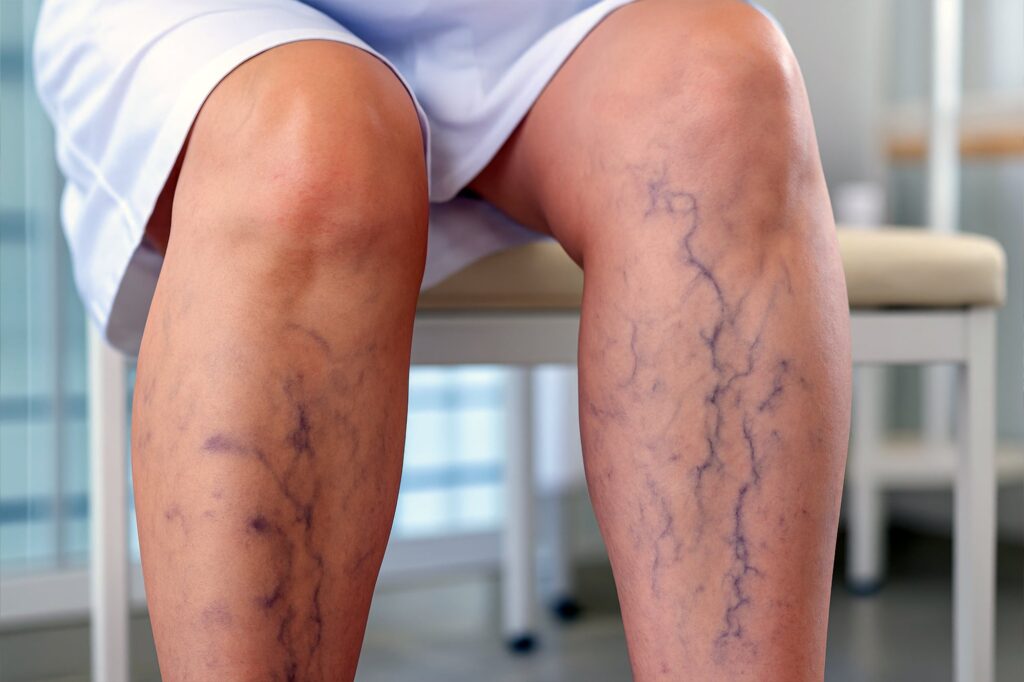
It is a question Dr. Glenn Babus hears regularly in his consulting room at Vascura Pain & Vein Clinic: Are varicose veins actually dangerous, or are they simply a cosmetic problem? The honest clinical answer is that it depends, and the distinction matters enormously.
For some patients, varicose veins remain a manageable nuisance for years. For others, they are the visible surface sign of a progressive vascular disease that can lead to serious, even life-threatening complications. Understanding which category you fall into is not something you should leave to guesswork.
Understanding What Varicose Veins Actually Represent
Varicose veins are not a cosmetic issue that happens to look medical. They are a direct symptom of chronic venous insufficiency (CVI), a vascular condition in which the one-way valves inside the leg veins have failed, allowing blood to flow backward and pool under persistently elevated pressure.
That pressure is the core problem. It does not stay contained inside the vein. Over weeks, months, and years, elevated venous pressure damages the vessel wall, breaks down surrounding tissue, alters skin integrity, and creates the physiological conditions in which serious complications develop.
This is why Dr. Babus emphasizes that a varicose vein you can see on the surface is a signal about what is happening deeper in the venous system, not just a cosmetic blemish.
Key Facts About Chronic Venous Insufficiency
- Affects an estimated 40% of the adult population in the United States
- Women are more commonly affected, though men face an equal risk of complications once the disease is present
- Progresses silently in many patients, symptoms worsen gradually rather than suddenly
- The CEAP classification system stages CVI from C0 (no visible signs) to C6 (active venous ulcer)
- CVI does not resolve without treatment; the damaged valves cannot repair themselves
The Real Dangers of Untreated Varicose Veins
While many varicose veins do not trigger an immediate medical emergency, the following complications are well-documented in patients who delay or avoid treatment. These are not rare worst-case scenarios; they are the natural progression of untreated venous disease.
1. Venous Skin Ulcers (CEAP Stage C6)
Chronic elevated venous pressure gradually breaks down the skin near the ankle and lower leg, eventually producing open, slow-healing wounds known as venous ulcers. These wounds are painful, prone to serious bacterial infection, and notoriously difficult to heal without simultaneously treating the underlying venous disease.
Venous ulcers account for approximately 70–80% of all chronic leg wounds in adults. They represent the most advanced and debilitating complication of untreated CVI, and they are largely preventable with timely intervention.
2. Superficial Thrombophlebitis
When a blood clot forms within a varicose vein, the result is superficial thrombophlebitis, characterized by intense localized pain, redness, warmth, and a firm, cord-like consistency along the affected vein. While not immediately life-threatening in most presentations, superficial thrombophlebitis requires prompt medical evaluation. In a meaningful percentage of cases, the clot extends into the deep venous system, converting a manageable condition into a serious one.
Dr. Babus performs an in-office duplex ultrasound to determine the exact extent of the clot and guide the appropriate treatment response.
3. Deep Vein Thrombosis (DVT)
Venous insufficiency creates a sluggish, turbulent, high-pressure blood flow environment in which deep vein thrombosis develops. A DVT, a clot forming within the deep leg veins, requires prompt anticoagulant therapy and carries significant morbidity if not treated.
Patients with untreated varicose veins and CVI have a measurably elevated DVT risk compared to the general population, particularly during periods of immobility such as long flights, surgical recovery, or hospitalization.
4. Pulmonary Embolism
A DVT clot that detaches and travels through the venous circulation to the pulmonary arteries causes a pulmonary embolism, a medical emergency with a significant mortality rate. Pulmonary embolism is the third most common cause of cardiovascular death, and venous insufficiency is a recognized contributing risk factor.
5. Spontaneous Varicose Vein Bleeding
Varicose veins that sit close to the skin surface can rupture from surprisingly minor trauma, such as a light knock, a scratch, or even prolonged pressure from clothing. Because the pressure inside varicose veins is substantially higher than in normal superficial veins, bleeding can be heavy and rapid.
Immediate action if a varicose vein bleeds: Lie down immediately, elevate the leg above heart level, apply firm continuous pressure, and seek same-day medical evaluation. Do not wait to see if it stops. Permanent spontaneous bleeding from varicose veins has a high recurrence rate without treatment.
Seek Emergency Care Immediately If You Experience:
- Suddenly, dramatic swelling in one leg with calf tenderness
- A leg that is red, hot, and swollen from the knee downward
- Chest pain, shortness of breath, or a rapid heart rate alongside leg symptoms
- A varicose vein that is actively bleeding and not controlled with firm pressure
These presentations may indicate DVT or pulmonary embolism — both require emergency evaluation.
Who Is at Greatest Risk for Varicose Vein Complications?
Not every patient with varicose veins faces equal risk. Based on Dr. Babus’s clinical experience, complications are significantly more likely in patients who meet one or more of the following criteria:
- Long-standing, untreated varicose veins — disease duration is one of the strongest predictors of complication risk
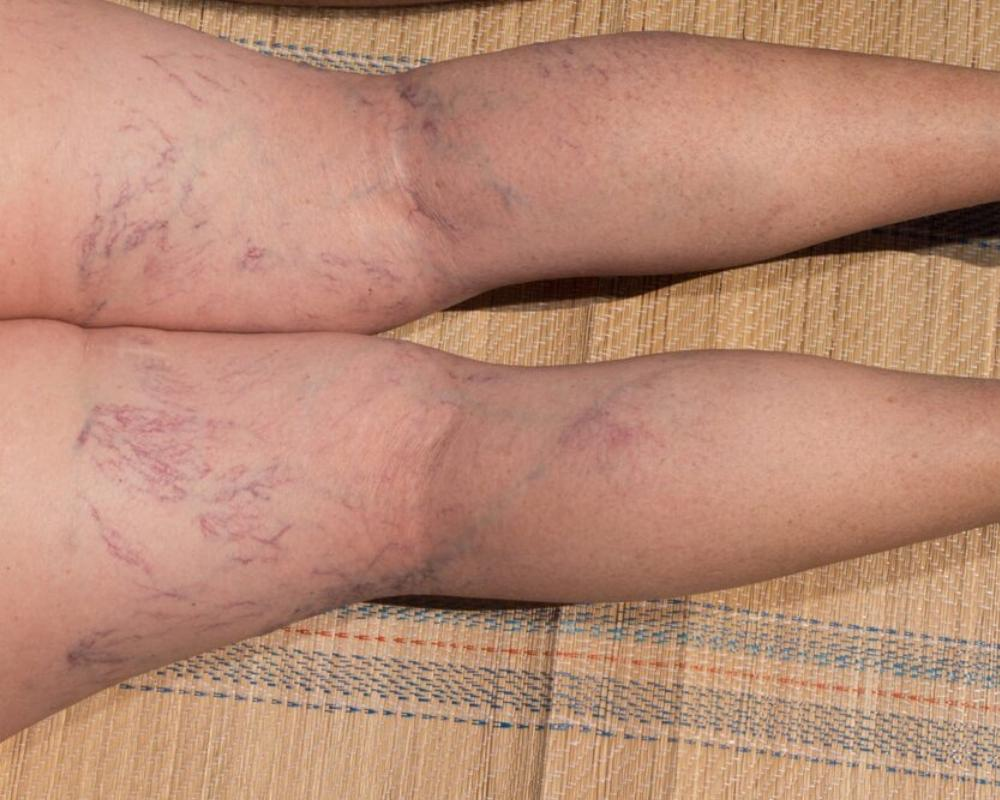
- Visible skin changes near the ankle — discoloration, hardening, or eczema — indicate that the disease has already reached CEAP Stage C4.
- Significant, persistent leg swelling — edema that does not resolve overnight signals elevated venous pressure affecting lymphatic function
- Sedentary lifestyle or occupations requiring prolonged standing — both impair the calf muscle pump that assists venous return.n
- Overweight or obesity — increases intra-abdominal pressure, worsening venous reflux.
- Personal or family history of blood clots — indicates underlying thrombophilic tendency. A previous history of DVT or superficial thrombophlebitis strongly elevates recurrence risk.
If two or more of these apply to you, early evaluation with Dr. Babus is not optional — it is clinically indicated.
How Dr. Babus Assesses Your Personal Risk Level
The safest approach is not to estimate your risk but to measure it. At Vascura Pain & Vein Clinic, every initial consultation includes a duplex ultrasound examination performed personally by Dr. Babus. This real-time imaging study maps the entire venous system of the affected leg, identifies which valves are failing, quantifies the degree of reflux, and stages the disease according to the CEAP framework.
This is not a screening tool; it is a precise diagnostic map that allows Dr. Babus to answer three specific questions:
- How advanced is your venous disease right now?
- Which veins are responsible, and what is the reflux pathway?
- What is the most appropriate, minimally invasive treatment to address the root cause?
Treatment options at Vascura Pain & Vein Clinic, all performed in-office, without general anesthesia, include radiofrequency ablation (RFA), endovenous laser ablation (EVLA), VenaSeal closure, Varithena foam therapy, ultrasound-guided sclerotherapy, and ambulatory phlebectomy. Dr. Babus personally performs every procedure.
Take the Next Step Toward Better Care
Contact us today to learn more about our pain and vein care services and schedule your visit with our team.
Book your ConsultationFrequently Asked Questions: Are Varicose Veins Dangerous?
Q. At what point are varicose veins dangerous?
- Varicose veins become dangerous when they cause skin changes, persistent swelling, blood clots, or spontaneous bleeding, typically at CEAP Stage C3 and beyond. Early evaluation prevents serious complications.
Q. How do I know if my varicose veins are serious?
- Signs of serious varicose veins include ankle discoloration, leg swelling that won’t resolve, pain disrupting sleep, or a hard, painful vein. A duplex ultrasound confirms the severity accurately.
Q. How to remove varicose veins without surgery?
- Minimally invasive options include radiofrequency ablation, endovenous laser ablation, VenaSeal, Varithena foam, and sclerotherapy, all performed in-office by Dr Babus with no general anaesthesia and minimal downtime.
Q. What should people with varicose veins avoid?
- Avoid prolonged standing or sitting, tight clothing around the waist, high heels, and excess weight. These worsen venous pressure and accelerate disease progression in untreated patients.
Schedule your duplex ultrasound evaluation today. Clarity is one appointment away.


