
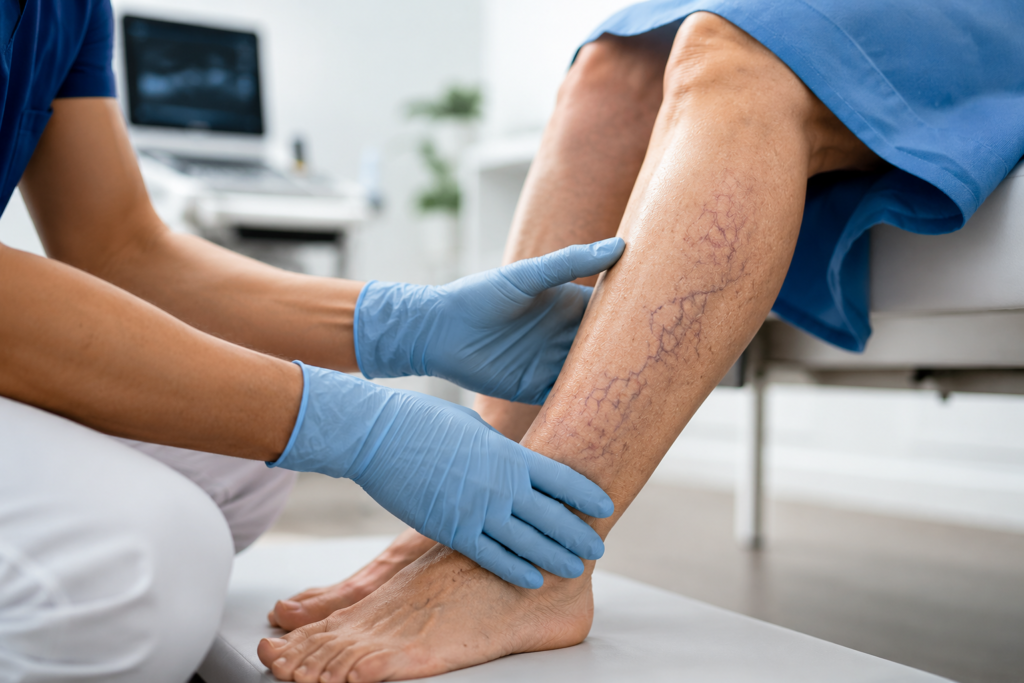
Most people living with varicose veins are told not to worry, and for a subset of patients, that reassurance is clinically appropriate. But varicose veins exist on a spectrum of severity, and there are precise, well-defined signs that indicate the condition has crossed from cosmetic inconvenience into a genuine medical concern requiring timely intervention. Knowing when to worry about varicose veins isn’t guesswork; it’s grounded in the physiology of chronic venous insufficiency.
Dr. Glenn Babus, MD, a board-certified vascular specialist at Vascura Pain & Vein Clinic in New Jersey, has spent years diagnosing and treating every stage of venous disease from the earliest spider veins to advanced venous ulcerations. His clinical perspective informs every section of this guide. If you are a New Jersey patient wondering whether your varicose veins need attention, the framework below is designed to give you clear, medically grounded answers.
Understanding Chronic Venous Insufficiency: The Root Cause
Varicose veins are a surface manifestation of chronic venous insufficiency (CVI), a condition in which the one-way valves inside the leg veins fail to close properly. Instead of moving blood efficiently back toward the heart, these damaged valves allow blood to pool and reflux downward, increasing pressure within the venous system. Over time, that elevated pressure damages the vessel wall, the surrounding skin, and the deeper tissues.
Understanding this mechanism matters because varicose veins are not a static condition. Without treatment, CVI tends to progress,s which is precisely why the warning signs below deserve your attention.
When Varicose Veins Are Usually Not an Emergency
Visible, rope-like veins on the legs that cause mild achiness, a sense of heaviness, or cosmetic concern after prolonged standing are extremely common and, in most cases, do not require urgent care. These symptoms can typically be managed conservatively with graduated compression stockings, regular leg elevation, and consistent walking while you schedule a routine evaluation with a vein specialist.
“Not an emergency” does not mean “safe to ignore indefinitely,” cautions Dr. Babus. “Every patient I see with advanced venous disease skin ulcers, permanent skin changes, and recurrent clotting was once in the ‘mild symptoms’ category. The difference between those who avoid serious complications and those who don’t is almost always early intervention.”
Symptoms That Mean It Is Time to See a Vein Specialist
Schedule an appointment with Dr. Babus promptly, within days, not weeks, if you experience any of the following:
- Persistent leg swelling that does not resolve overnight with elevation. Swelling (edema) that lingers despite rest and elevation signals that venous pressure has exceeded the lymphatic system’s capacity to compensate and is an early marker of progressive CVI.
- Skin discoloration around the ankle or lower leg. A brownish or reddish hue (known as hemosiderin staining) indicates that red blood cells are leaking out of the distended veins and depositing iron pigment in the skin. This is a direct sign of tissue damage.
- Skin that has become hard, tight, or leathery. Lipodermatosclerosis fibrosis of the subcutaneous fat is a sign of long-standing venous hypertension and sharply increases the risk of venous ulceration.
- A rash, eczema, or itchy patch near a varicose vein. Venous eczema (stasis dermatitis) is frequently misdiagnosed as a skin condition. It requires vascular treatment, not just topical steroids.
- Varicose veins have been worsening noticeably over several months. Progressive enlargement or the development of new varicosities indicates that venous reflux is worsening and the underlying disease is advancing.
- Leg pain interfering with sleep, walking, or daily activities. Pain that disrupts normal function has moved beyond cosmetic inconvenience into functional impairment, a clear indication for intervention.
- Worsening restless legs or severe nighttime cramping. These neurological symptoms are strongly associated with venous reflux disease and often resolve significantly after treatment.
These symptoms collectively indicate that venous insufficiency has progressed to a stage where tissue damage is actively occurring. Early intervention at this stage is straightforward; waiting until complications develop is not.
Symptoms That Require Urgent or Emergency Attention
Seek urgent medical care or contact Dr. Babus’s office immediately if you experience any of the following:
- A bleeding varicose vein. Even a minor laceration over a varicose vein can produce rapid, heavy blood loss because the elevated pressure inside these vessels is substantially higher than in a normal superficial vein. Bleeding varicose veins do not stop reliably on their own. Immediate action: lie down, elevate the leg above the level of your heart, apply firm, continuous pressure, and seek same-day medical evaluation. Do not assume this will not recur.
- A vein that suddenly becomes extremely painful, red, warm to the touch, and cord-like. This clinical picture describes superficial thrombophlebitis, a blood clot that has formed within a surface vein. While superficial clots are not as immediately life-threatening as deep vein thrombosis, they can propagate into the deep venous system and require anticoagulation in certain cases. Dr. Babus performs a duplex ultrasound evaluation to determine the clot’s exact extent and guide treatment.
- Sudden, significant swelling in one leg, particularly with calf tenderness or pain. This is the classic presentation of deep vein thrombosis (DVT). A DVT is a medical emergency: the clot can break free, travel to the lungs, and cause a pulmonary embolism (PE)—a potentially fatal event. Do not drive yourself. Call 911 or proceed to an emergency department immediately.
- Shortness of breath, chest pain, or rapid heart rate in the setting of leg swelling. These symptoms may indicate that a DVT has already embolized to the lungs. Pulmonary embolism requires emergency intervention. Call 911 immediately.
Take the Next Step Toward Better Care
Contact us today to learn more about our pain and vein care services and schedule your visit with our team.
Book your ConsultationHow Dr. Babus Classifies Venous Disease Severity: The CEAP Framework
At Vascura Pain & Vein Clinic, Dr. Babus uses the internationally recognized CEAP classification system (Clinical, Etiologic, Anatomic, Pathophysiologic) to stage each patient’s venous disease and guide treatment decisions. Understanding where you fall on this spectrum clarifies urgency:
- C0–C1: No visible or palpable signs of venous disease; spider veins only. Observation or cosmetic treatment.
- C2: Varicose veins present. Routine evaluation and discussion of treatment options.
- C3: Edema (swelling) attributable to venous disease. Prompt evaluation warranted.
- C4: Skin changes, including discoloration, lipodermatosclerosis, or eczema. Timely intervention to prevent ulceration.
- C5: Healed venous ulcer. Active treatment to prevent recurrence.
- C6: Active venous ulcer. This is a wound care and vascular emergency requiring immediate specialist management.
Most NJ patients presenting to Vascura Pain & Vein Clinic for the first time are at C2 or C3. The goal of Dr. Babus’s practice is to intervene before patients reach C4 and beyond.
Treatment Options at Vascura Pain & Vein Clinic, NJ
When Dr. Babus determines that intervention is appropriate, patients at Vascura Pain & Vein Clinic have access to a full range of minimally invasive, office-based procedures:
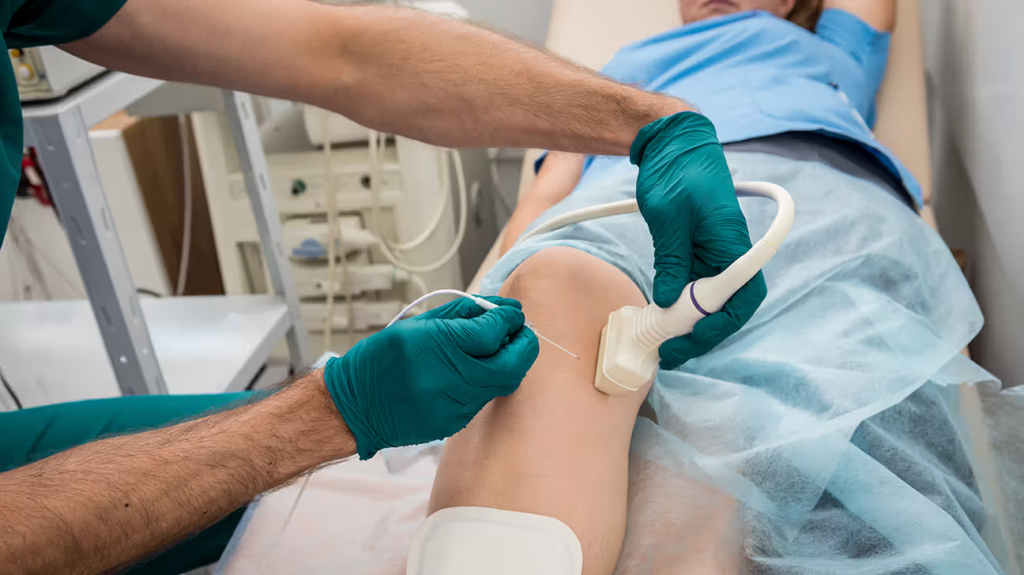
- Endovenous laser ablation (EVLA) and radiofrequency ablation (RFA): Catheter-based thermal treatments that close the diseased great or small saphenous vein with minimal discomfort and no general anesthesia. Most patients return to normal activity the same day.
- Ultrasound-guided sclerotherapy: Chemical closure of varicose tributaries and perforator veins using injectable sclerosant under real-time imaging guidance.
- VenaSeal: A medical adhesive delivered via catheter that seals the refluxing vein, with no tumescent anesthesia, no thermal energy, and no compression stockings required post-procedure.
- Ambulatory phlebectomy: Micro-incision removal of large surface varicosities performed under local anesthesia in the office.
- Wound care and venous ulcer management: For advanced C5–C6 disease, Dr. Babus coordinates a comprehensive treatment plan integrating vascular intervention with evidence-based wound care protocols.
The Clinical Rule of Thumb for NJ Varicose Vein Patients
If your varicose veins are changing in appearance, in symptom intensity, or in how much they limit your daily life, that change is your clinical signal to act. Stable, longstanding varicose veins with mild, unchanging symptoms warrant a routine evaluation. Any new, worsening, or alarming symptom warrants prompt attention.
“Venous disease does not reverse on its own,” says Dr. Babus. “The valves that have stopped working will not repair themselves. What I can do, with the minimally invasive tools we have today,y is stop the progression, relieve symptoms, and, in the case of skin changes, reverse the early damage before it becomes permanent. But timing matters. Patients who come in at C2 or C3 have excellent outcomes. Patients who wait until C6 face a much longer and more complex treatment course.”
When in doubt, call Vascura Pain & Vein Clinic. A brief conversation with our clinical team can determine whether you need to be seen urgently or can schedule a convenient appointment. There is no guesswork required on your part.
Frequently Asked Questions: Varicose Veins in New Jersey
Q. What happens if varicose veins are left untreated?
A. Without treatment, varicose veins tend to worsen over time. The underlying valve failure progresses, leading to chronic swelling, skin discoloration, hardening of the skin (lipodermatosclerosis), and eventually open venous ulcers that are difficult to heal. There is also an increased risk of blood clots, including deep vein thrombosis (DVT).
Q. What are the red flags for varicose veins?
A. Red flags include sudden bleeding from a vein, a vein that becomes hard, red, and painful (superficial thrombophlebitis), one leg swelling dramatically and suddenly (possible DVT), skin around the ankle turning brown or leathery, and shortness of breath alongside leg symptoms. Any of these warrants same-day or emergency care.
Q. How do you know if varicose veins are serious?
A. Varicose veins become serious when they begin causing symptoms beyond mild achiness, particularly swelling that doesn’t resolve overnight, skin changes near the ankle, pain that disrupts sleep or walking, or any bleeding. A duplex ultrasound performed by a vein specialist like Dr. Babus is the definitive way to assess severity.
Q. At what stage should varicose veins be treated?
A. Treatment is recommended from Stage C2 onward when symptoms are present, and urgently at C3 (swelling) and C4 (skin changes). Waiting until C5 or C6 (ulceration) makes treatment significantly more complex. Most insurers cover intervention once functional symptoms — pain, swelling, or skin changes — are documented.
Schedule Your Varicose Vein Evaluation in New Jersey
Dr. Glenn Babus and the team at Vascura Pain & Vein Clinic provide comprehensive venous disease evaluation and minimally invasive treatment for patients throughout New Jersey. Whether you are experiencing early symptoms or an urgent warning sign, we are here to provide expert guidance and same-week appointments for concerning cases.
Vascura Pain & Vein Clinic | Dr. Glenn Babus, MD | New Jersey
Call us today or request an appointment online. Your veins cannot wait, and neither should you.


