
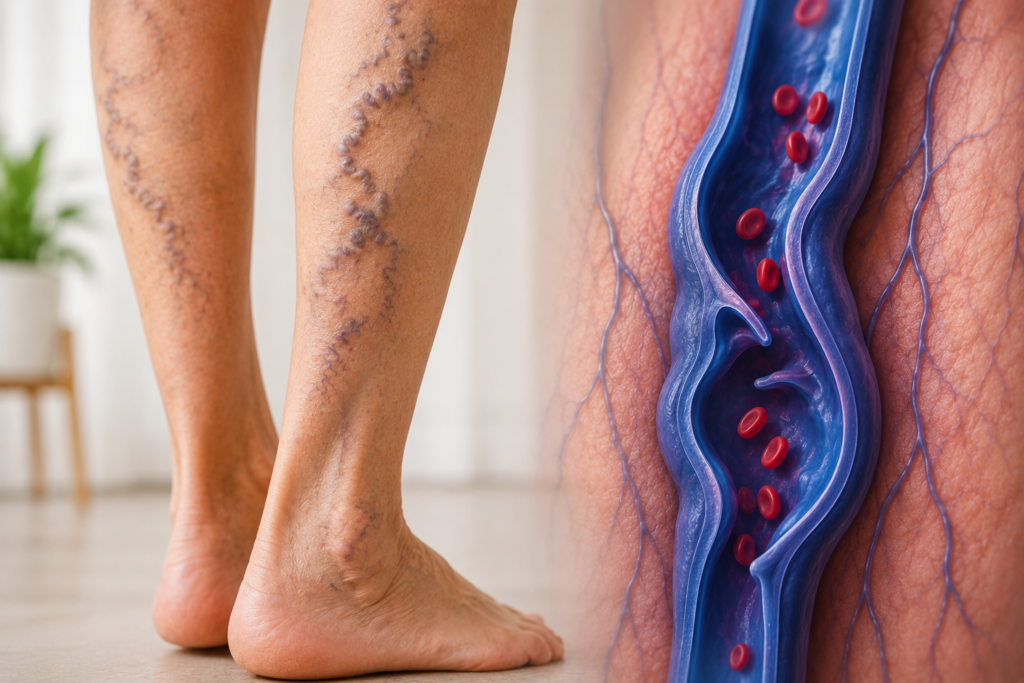
When patients across New Jersey search for varicose vein treatment near me, they often have one pressing concern: could these bulging veins in my legs be putting me at risk for a blood clot? That concern is entirely valid. The relationship between varicose veins and serious clotting conditions is real, clinically significant, and frequently misunderstood by patients and even minimized by some providers.
Dr. Glenn Babus at Vascura Pain & Vein Clinic is committed to giving you the full picture not vague reassurance and not unnecessary alarm. Whether you are searching for a varicose veins specialist near me for the first time or have been managing vein disease for years, this guide is designed to give you medically accurate, actionable information.
What Are Varicose Veins and Why Do They Form?
Varicose veins are enlarged, twisted, rope-like veins that are visible just beneath the skin surface, most often in the legs. They occur when the one-way valves inside your leg veins start to fail. Healthy valves push blood up toward the heart against gravity. When those valves weaken or stop working, blood flows backward and pools within the vein, a condition called chronic venous insufficiency (CVI).
Over time, the pooling of blood causes the vein wall to stretch and distort. The result is the visible bulging that many patients describe as unsightly or uncomfortable. But varicose veins are more than a cosmetic concern. They are a sign of underlying circulatory dysfunction that, if left untreated, can progress into more serious vascular problems.
Common symptoms associated with varicose vein disease include:
- Aching, heaviness, or fatigue in the legs, especially after prolonged standing
- Swelling of the ankles and lower legs by the end of the day
- Throbbing, cramping, or restless legs at night
- Itching or burning around visible veins
- Skin discoloration or leathery texture near the ankles
- Development of venous ulcers in advanced cases
If you recognize these symptoms, finding a varicose vein specialist near you for a proper ultrasound evaluation is the most important next step, not waiting for the condition to worsen.
The Connection Between Varicose Veins and Blood Clots
Varicose veins form because valve failure causes blood to pool and flow sluggishly, sometimes even in the wrong direction. That slow, turbulent blood flow creates precisely the circulatory environment in which clots are most likely to develop. Two distinct types of clots can occur in the setting of varicose vein disease, and understanding the difference is critical.
Superficial Thrombophlebitis: The Surface Clot
A clot that forms directly inside a varicose vein near the skin surface is called superficial thrombophlebitis. You may notice the affected vein suddenly becoming hard and cord-like to the touch. The overlying skin typically becomes red, warm, and acutely painful. The vein may feel like a tender knot under the skin.
While superficial clots are not immediately life-threatening in the same way that deep vein clots are, they should never be dismissed. Research shows that in a significant percentage of cases, superficial clots extend, either migrating upward into the deep venous system or reaching the junction where the surface venous system connects to the deep veins. At that point, the risk profile changes entirely.
Any suspected superficial thrombophlebitis should be evaluated with a duplex ultrasound to map the full extent of the clot and determine whether it is approaching the deep system.
Deep Vein Thrombosis (DVT): The More Serious Risk
Deep vein thrombosis occurs when a clot forms inside the deep veins of the leg, the large vessels that carry the majority of blood back to the heart. DVT is a serious and potentially life-threatening medical condition that requires prompt diagnosis and treatment.
Classic warning signs of DVT include:
- Sudden, significant swelling of one leg, often the entire calf, ankle, or thigh
- Deep aching or cramping in the calf, especially when walking or flexing the foot
- A warm, red, or discolored area on the leg
- Prominent surface veins appearing suddenly in the affected leg
- A feeling of heaviness or tightness that does not improve with rest
WARNING: If you experience sudden one-sided leg swelling, deep calf pain, or leg warmth and redness, especially after a long flight, surgery, or a period of immobility, seek emergency evaluation immediately. Do not wait for a scheduled appointment.
Pulmonary Embolism: The Downstream Danger
The most dangerous complication of DVT is pulmonary embolism (PE) a condition in which a fragment of the clot breaks free from the leg vein, travels through the bloodstream, and lodges in the pulmonary arteries that supply the lungs. When this happens, blood flow to part of the lung is suddenly blocked.
Pulmonary embolism kills an estimated 100,000 Americans every year and is one of the most preventable causes of hospital-related death. Symptoms can include sudden chest pain, shortness of breath, rapid heart rate, coughing up blood, lightheadedness, or sudden collapse. PE is a medical emergency.
Patients with chronic venous insufficiency and varicose vein disease face an elevated baseline risk, particularly during high-risk periods such as long-haul flights, post-surgical recovery, hospitalization, or extended bed rest.
Does Having Varicose Veins Mean You Will Get a Blood Clot?
No, not inevitably. But varicose vein disease does elevate your clotting risk compared to people without venous insufficiency. The degree of risk is not the same for every patient. It depends on multiple factors that a qualified varicose veins specialist near me can evaluate during a clinical examination and duplex ultrasound.
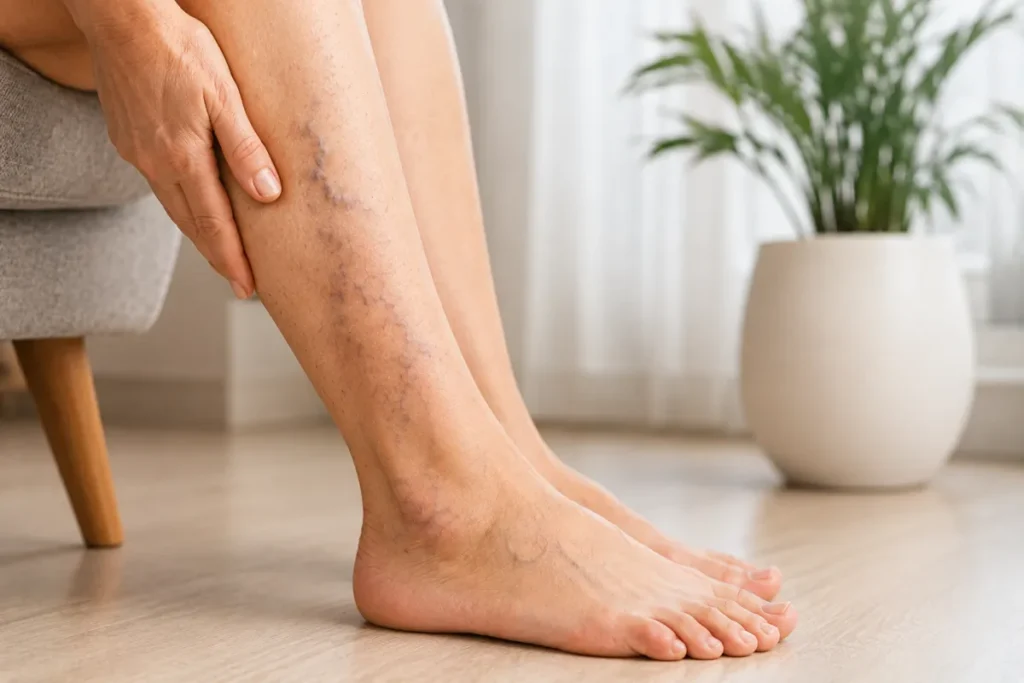
Risk factors that compound the danger include:
- A personal or family history of DVT or pulmonary embolism
- A known inherited clotting disorder (thrombophilia)
- Obesity or a sedentary lifestyle with prolonged sitting or standing
- Pregnancy or recent childbirth
- Oral contraceptive use or hormone replacement therapy
- Recent surgery, especially orthopedic procedures involving the hip or knee
- Active cancer or cancer treatment over 60
- Long-distance travel with limited mobility
A duplex ultrasound evaluation with Dr. Babus at Vascura Pain & Vein Clinic gives you a personalized risk profile, not a generic answer. The ultrasound maps your venous anatomy, identifies valve dysfunction, measures blood flow patterns, and checks for existing clot formation that may be silent and asymptomatic.
Beyond Blood Clots: Other Complications of Untreated Varicose Veins
Many patients searching for varicose veins near me assume their veins are primarily a cosmetic issue. This is one of the most common and costly misconceptions in vascular health. Untreated chronic venous insufficiency progresses through well-defined stages, and the later stages involve complications that dramatically affect quality of life.
Progressive complications of untreated varicose vein disease include:
- Lipodermatosclerosis — hardening and discoloration of the skin around the ankle and lower leg, caused by chronic inflammation from venous pooling
- Venous eczema — intensely itchy, scaly, inflamed skin that can weep fluid and become infected
- Spontaneous bleeding—varicose veins close to the skin surface can rupture, causing significant external bleeding with minimal trauma
- Venous leg ulcers — non-healing wounds that develop near the ankle and are among the most difficult chronic wounds to treat; they are responsible for enormous healthcare costs and patient suffering
- Recurrent superficial clotting and extension into the deep system
These complications are largely preventable. Early evaluation and appropriate varicose veins treatment near me reduces your risk of progression significantly and is far more cost-effective than managing advanced disease.
Take the Next Step Toward Healthier Veins in New Jersey
You do not have to keep living with leg pain, swelling, or untreated vein issues. At Vascura Pain & Vein Clinic, Dr. Glenn Babus provides expert, personalized care for varicose veins and vein disease. Patients across New Jersey can count on compassionate, insurance-friendly treatment designed to help restore comfort and confidence.
Book Your ConsultationModern Varicose Vein Treatment Near Me: What Are Your Options?
Vein treatment has been transformed over the past two decades. The procedures available at Vascura Pain & Vein Clinic today are minimally invasive, highly effective, performed in-office under local anesthesia, and associated with rapid recovery. There is no longer any reason to avoid treatment out of fear of surgery.
Endovenous Laser Ablation (EVLA)
A thin laser fiber is inserted into the diseased vein under ultrasound guidance. The laser energy heats the vein wall from the inside, causing it to collapse and seal permanently. Blood reroutes through healthy neighboring veins. The procedure takes approximately 45 minutes, and most patients return to normal activity the same day.
Radiofrequency Ablation (RFA)
Similar in principle to laser ablation, radiofrequency ablation uses controlled heat delivered by a small catheter to close the diseased vein. RFA is associated with excellent outcomes and is well-tolerated with minimal discomfort.
Ultrasound-Guided Foam Sclerotherapy
A chemical sclerosant is injected directly into the diseased vein under real-time ultrasound visualization. The solution irritates and closes the vein wall. This approach is particularly effective for veins that are too tortuous or small for thermal ablation.
Varithena (Polidocanol Injectable Foam)
An FDA-approved injectable foam that fills and treats varicose veins and their tributaries with a single injection. Varithena is especially useful for complex or recurrent varicose vein patterns and can treat veins that other methods cannot easily reach.
Visual Sclerotherapy for Spider Veins
Fine needle injections of a sclerosing solution close small surface spider veins and reticular veins. Multiple sessions may be recommended for comprehensive cosmetic clearance.
Dr. Babus will recommend the most appropriate combination of treatments based on your duplex ultrasound findings, the severity of your venous disease, and your personal goals. Many patients require a combination of approaches for optimal results.
Is Varicose Vein Treatment Covered by Insurance in New Jersey?
Yes — in many cases. When varicose veins cause documented symptoms such as leg pain, swelling, skin changes, or bleeding, treatment is typically considered medically necessary rather than cosmetic. Most major insurance plans, including Medicare and many New Jersey commercial insurance providers, cover medically necessary vein treatment.
At Vascura Pain & Vein Clinic, our team handles the prior authorization process and works directly with your insurance company to maximize your covered benefits. We believe that cost should never be a barrier to accessing necessary vascular care. Contact our office and we will verify your coverage before your first appointment.
Why Choose Dr. Glenn Babus at Vascura Pain & Vein Clinic?
When you search varicose veins near me or varicose veins specialist near me, you deserve more than a clinic that performs vein procedures you deserve a physician who combines advanced diagnostic capabilities, comprehensive treatment options, and a genuine commitment to your long-term vascular health.
- Board-certified specialist with extensive training in minimally invasive vascular interventions
- State-of-the-art in-office duplex ultrasound performed and interpreted by Dr. Babus personally
- Full range of FDA-approved varicose vein treatments under one roof
- Insurance verification and authorization support for every patient
- Conveniently located in New Jersey to serve patients throughout the region
- A patient-first philosophy that prioritizes education, transparency, and individualized care
Ready to Stop Searching for ‘Varicose Veins Treatment Near Me‘? Call Vascura Pain & Vein Clinic Today and Consult Dr. Glenn Babus, MD, New Jersey’s Trusted Varicose Veins Specialist
Frequently Asked Questions About Varicose Veins and Treatment
Q1. Are varicose veins a sign that I have bad circulation?
Varicose veins are a sign that your venous valves are not functioning properly, which leads to chronic venous insufficiency. This is a specific type of circulatory problem in the venous system — distinct from arterial circulation issues. A duplex ultrasound can map exactly which valves are failing and how severely blood is refluxing.
Q2. What is the difference between varicose veins and spider veins?
Varicose veins are large, bulging, rope-like veins that protrude beneath or above the skin surface and are caused by significant valve failure. Spider veins are smaller, flat, web-like clusters of red, blue, or purple vessels close to the skin surface. Both can be treated effectively, but varicose veins carry more medical risk and typically require a more comprehensive treatment plan.
Q3. How do I know if my leg pain is from varicose veins or something else?
Venous leg pain is usually worsened by standing or sitting for long periods and relieved by walking or raising the legs. This is sometimes referred to as a ‘heavy,’ ‘aching,’ or ‘throbbing’ sensation. Sharp, persistent pain or pain with rapid swelling, warmth, or redness of the skin may be an indication of DVT and should be evaluated urgently. Dr. Babus will be able to determine the cause of your discomfort with a clinical examination and ultrasound.
Q4. Is varicose vein treatment painful?
Modern minimally invasive procedures are performed under local anesthesia and are well-tolerated. Most patients describe mild pressure or warmth during treatment and minimal discomfort afterward. The vast majority of patients return to light activity the same day. Post-procedure soreness, bruising, and mild swelling are common and typically resolve within one to two weeks.
Q5. Can varicose veins come back after treatment?
Treated veins do not reopen. However, venous disease is an ongoing condition — existing healthy veins in the same leg can develop new valve dysfunction over time, particularly if underlying risk factors like prolonged standing, obesity, or hormonal changes continue. Dr. Babus will discuss a long-term vein health strategy that includes compression therapy, lifestyle modifications, and monitoring to minimize recurrence.
Q6. How long does a varicose vein consultation with Dr. Babus take?
Your first appointment with Vascura Pain & Vein Clinic will consist of a medical history, a physical examination of both legs and a duplex ultrasound performed at the office. Allow about 60-90 minutes. You will be leaving with a better understanding of your venous disease, your clotting risk and a personalized plan for treatment.
Q7. What happens if I do not treat my varicose veins?
Without treatment, chronic venous insufficiency typically progresses. The sequence of deterioration often moves from varicose veins and swelling to skin discoloration and hardening, venous eczema, spontaneous bleeding, and ultimately venous leg ulcers. The risk of superficial and deep clot formation also increases over time. Early intervention is significantly more effective and less costly than treating advanced venous disease.
Q8. Does Vascura Pain & Vein Clinic accept my NJ insurance?
Vascura Pain & Vein Clinic works with most major insurance carriers in New Jersey, including Medicare and many commercial plans. When treatment is deemed medically necessary — which applies to most patients with symptomatic varicose veins — coverage is typically available. Our staff will verify your insurance benefits before your appointment at no charge.
You do not need to live with leg pain, swelling, or the worry of untreated vein disease. Whether you have been putting off seeking care for years or just noticed your first symptomatic varicose vein, Dr. Glenn Babus at Vascura Pain & Vein Clinic is ready to provide the expert evaluation and personalized care you deserve.
Patients across New Jersey searching for varicose veins treatment near me, a varicose veins specialist near me, or simply varicose veins near me will find comprehensive, compassionate, insurance-friendly care at Vascura Pain & Vein Clinic.


